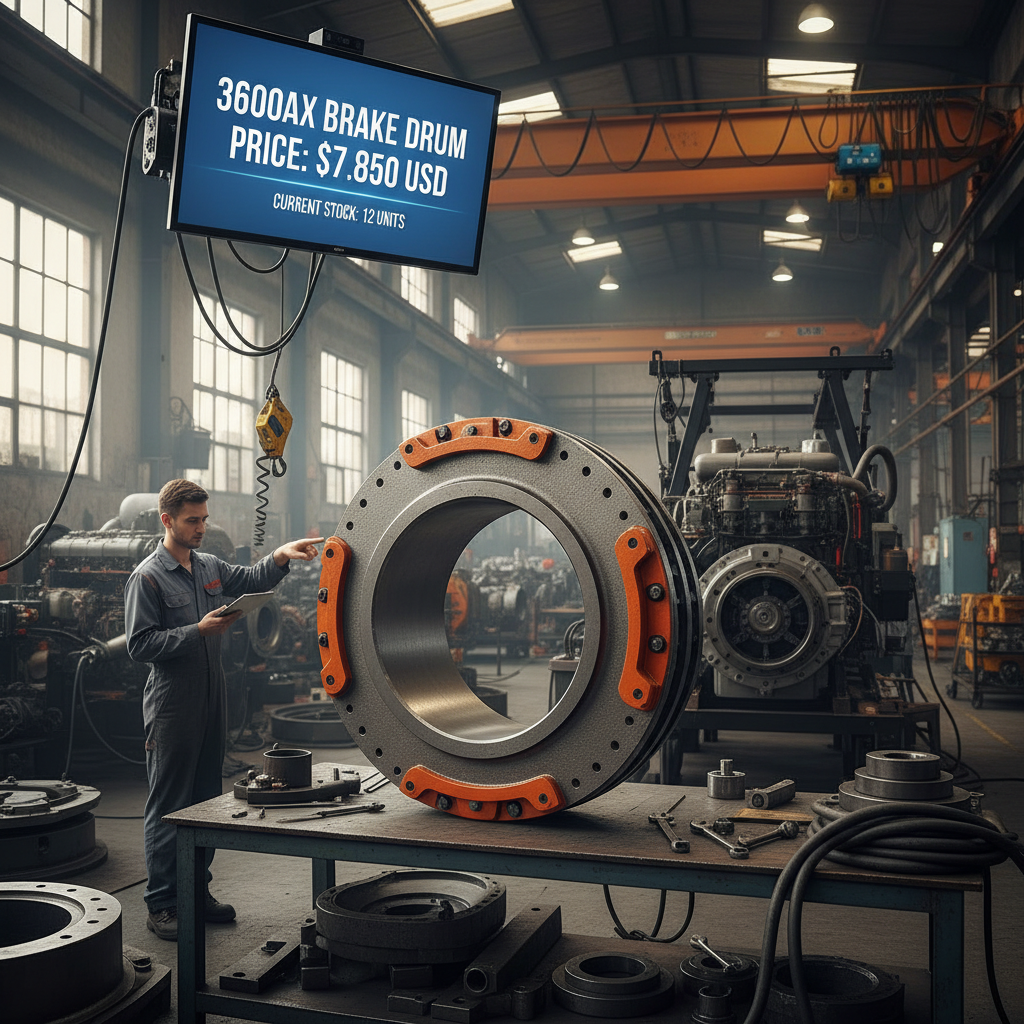
The global automotive supply chain is currently facing a critical shift toward higher thermal efficiency and material durability, particularly in braking systems. As vehicle weights increase due to electrification and the demand for heavier cargo loads in commercial transport, the structural integrity of the friction pair becomes a paramount engineering concern. In this context, selecting a specialized brake drum manufacturer is no longer just about procurement, but about ensuring systemic safety through precise metallurgical control.
The technical challenge lies in the balance between heat dissipation and wear resistance. Drum brakes, while highly effective for parking and low-speed stopping, are susceptible to mechanical deformation and "brake fade" when heat capacity is exceeded. For fleet operators and OEM engineers, the ability of a component to maintain its geometry under extreme thermal stress directly impacts pedal force consistency and overall vehicle braking distance.
This analysis explores the engineering logic behind modern drum brake production, evaluating the critical parameters that define high-performance castings. By examining material classifications and manufacturing precision, we provide a framework for understanding how a professional brake drum manufacturer mitigates vibration and noise through advanced CNC machining and dynamic balancing.


The brake drum operates as a critical friction pair, rotating in synchronization with the tire. When the braking system is engaged, hydraulic oil pressure forces the brake shoes against the inner circumference of the drum. This conversion of kinetic energy into thermal energy generates the friction necessary to halt the vehicle's rotation.
From an engineering perspective, the drum must possess exceptional rigidity to resist the outward pressure of the shoes. Components such as the brake base plate and cylinder must work in seamless alignment to ensure that the contact surface is uniform, preventing uneven wear and reducing the risk of mechanical deformation.
Precision in wall thickness and the placement of reinforcement ribs are the primary determinants of a drum's longevity. A professional brake drum manufacturer focuses on these variables to prevent the "ovalization" of the drum under high-temperature cycles. If the wall is too thin, the component may warp; if it is too thick, the added unsprung weight can negatively impact vehicle handling and fuel efficiency.
Surface roughness and machining tolerances are equally vital. The internal diameter must be processed with high-precision CNC vertical lathes to ensure a perfectly cylindrical interface. Any deviation in the roundness of the inner edge leads to increased pedal force and a perceptible vibration during deceleration, which indicates poor contact between the shoe and the drum surface.
Beyond geometry, the heat capacity of the material dictates the maximum load the system can handle without failure. By optimizing the material density and using automated paint lines for protective coating, manufacturers can reduce oxidative corrosion while maintaining the high thermal conductivity required to move heat away from the friction surface.
The selection of materials for brake drums usually falls into three technical categories: integral casting, steel plate combined with cast iron, and light alloy combinations. Each route offers a different trade-off between weight, cost, and thermal stability. Integral casting remains the industry standard for heavy-duty applications due to its superior strength and rigidity.
To validate these metallurgical properties, rigorous testing is essential. The use of spectrometers, hardness testers, and tensile testing machines allows a manufacturer to verify that the cast iron meets the specific carbon and silicon levels required for wear resistance. This level of quality control ensures that the drums can withstand thousands of thermal cycles without significant material fatigue.
Efficient heat dissipation is the only way to prevent brake fade in heavy-duty commercial vehicles. The design of the external cooling fins and the overall surface area of the drum determine how quickly thermal energy is transferred to the surrounding air. In stop-and-go urban traffic, the frequency of braking cycles creates a cumulative heat load that can lead to mechanical deformation if not managed.
Engineering teams evaluate the efficiency of different drum designs by measuring the rate of temperature drop after a standardized braking event. The goal is to achieve a balanced thermal gradient across the drum wall to prevent localized hot spots, which are the primary cause of surface cracking and irregular wear patterns.
In representative engineering scenarios, drum brakes are frequently deployed in the rear axles of medium-to-heavy trucks and buses where high static holding power is required. For example, in logistics vehicles operating in mountainous terrain, the rear brakes must withstand prolonged engagement during descent. In such cases, the selection of a drum with higher heat capacity is essential to prevent the braking system from overheating and failing.
For fleet managers, the total cost of ownership is driven by the maintenance interval of the drums. Regular inspection for cracks, deformations, and wear depth is required to ensure safety. A high-quality casting reduces the frequency of drum resurfacing or replacement, directly improving vehicle uptime and reducing operational expenditures.
The industry is moving toward the development of advanced composite castings that can further reduce unsprung weight without sacrificing the strength and rigidity of traditional cast iron. Research is focusing on the integration of ceramic particles within the iron matrix to enhance wear resistance and reduce the rate of surface oxidation at high temperatures.
Another significant trend is the implementation of AI-driven quality control in the manufacturing process. By using automated optical inspection and dynamic balancing machines, a brake drum manufacturer can identify casting defects at the microscopic level, ensuring that every piece leaving the factory meets zero-defect safety standards.
Ultimately, the evolution of the brake drum will be tied to the wider trend of vehicle electrification. While disc brakes are becoming more common, the cost-effectiveness and robustness of drum brakes ensure they will remain a staple for specific heavy-duty applications, provided they continue to evolve in thermal efficiency.
Selecting the correct brake drum configuration depends on the intended load profile and operating environment of the vehicle. While integral castings provide the highest reliability, combined alloys are better suited for vehicles where weight reduction is a primary goal to meet strict emissions or efficiency regulations.
The following evaluation matrix compares different configuration profiles based on common engineering requirements. It is important to note that these are representative profiles and actual performance depends on the specific metallurgical grade and machining precision of the component.
When evaluating a supplier, engineers should prioritize the presence of ISO/TS16949 certifications and the availability of detailed testing data, including hardness and tensile strength reports, to ensure the parts can handle the actual stressors of the application.
| Configuration Type | Thermal Stability | Weight Efficiency | Recommended Use Case |
|---|---|---|---|
| Basic Casting | Moderate | Low | Light Commercial Vehicles |
| Standard Duty | High | Moderate | Regional Distribution Trucks |
| High-Duty Grade | Very High | Low | Heavy Haulage / Mining |
| Precision Alloy | Moderate | High | Urban Transit Buses |
| Combined Composite | High | Moderate | Specialized Logistics |
| Industry Baseline | Moderate | Moderate | General Purpose Utility |
Wall thickness directly influences the drum's heat capacity and structural rigidity. A thicker wall can absorb more thermal energy before reaching critical temperatures, reducing the risk of brake fade. However, excessive thickness increases unsprung weight, which can degrade suspension response. Engineering a professional drum requires calculating the optimal thickness to maintain a flat friction surface under maximum hydraulic pressure while keeping the overall weight within the vehicle's specification limits.
Brake judder is typically caused by "out-of-roundness" or ovalization of the drum's inner surface. This occurs when the drum undergoes uneven thermal expansion or is subjected to excessive heat that exceeds the material's yield strength. When the brake shoes engage an oval surface, the friction coefficient fluctuates rapidly, creating a vibration that is felt through the brake pedal. This is why dynamic balancing and precision CNC machining are critical steps for any reputable brake drum manufacturer.
High-grade grey cast iron is preferred for its excellent thermal conductivity and damping capacity. For extreme environments, alloys with increased silicon or chromium content are used to improve oxidation resistance and maintain hardness at high temperatures. While light alloys offer weight savings, they are generally less effective at dissipating heat than cast iron, making them more suitable for lighter loads or vehicles with supplementary cooling systems.
Indicators of failure include an increase in braking distance, a "spongy" pedal feel, or audible grinding noises. Visually, the presence of heat cracks (small radial lines on the surface) or significant scoring indicates the drum has reached its wear limit. If a drum has warped, it will cause the vehicle to pull to one side or create pulsations in the pedal. Regular measurement of the inner diameter using a micrometer is the only way to ensure the drum remains within the safe operating range.
Yes, but only up to the manufacturer's maximum diameter limit. Resurfacing removes a thin layer of metal to restore a perfectly cylindrical surface. However, every time material is removed, the remaining wall becomes thinner, which reduces the drum's heat capacity and increases its susceptibility to warping. Once the inner diameter exceeds the safety threshold specified in the technical manual, the drum must be replaced to avoid catastrophic structural failure.
CNC vertical lathes ensure that the axis of rotation is perfectly aligned with the center of the drum. This eliminates "run-out" and ensures that the inner friction surface is concentric. For a brake drum manufacturer, this precision means that the brake shoes make uniform contact across the entire surface, which optimizes the braking force and prevents premature wear of the shoes. It also allows for the consistent production of complex reinforcement rib geometries.
The reliability of a vehicle's braking system depends fundamentally on the metallurgical quality and machining precision of the brake drum. By balancing heat capacity, material rigidity, and geometric accuracy, manufacturers can significantly reduce the risk of brake fade and mechanical failure in heavy-duty applications. The transition toward more advanced composites and AI-driven quality control represents the next phase in ensuring automotive safety.
For procurement professionals and engineers, the focus must remain on verifiable technical data and adherence to international quality standards. Partnering with an experienced brake drum manufacturer ensures that components are not only compatible with the vehicle's architecture but are optimized for the specific thermal and mechanical stresses of the intended operating environment.