

Comprehensive Guide to Understanding Drum Brakes on a Semi Truck
Understanding Drum Brakes on a Semi Truck
Maintaining the safety and efficiency of your semi-truck heavily relies on a robust braking system. Among the various braking components, drum brakes on a semi truck play a crucial role. This article provides a comprehensive overview of semi-truck drum brakes, covering their function, components, maintenance, common issues, and the importance of quality replacements like those offered by Ningchai Brake Drum. A properly functioning drum brake system ensures safe stops and prevents potentially dangerous accidents on the road. Understanding these systems is vital for fleet managers, drivers, and maintenance personnel alike.
How Do Semi-Truck Drum Brakes Work?
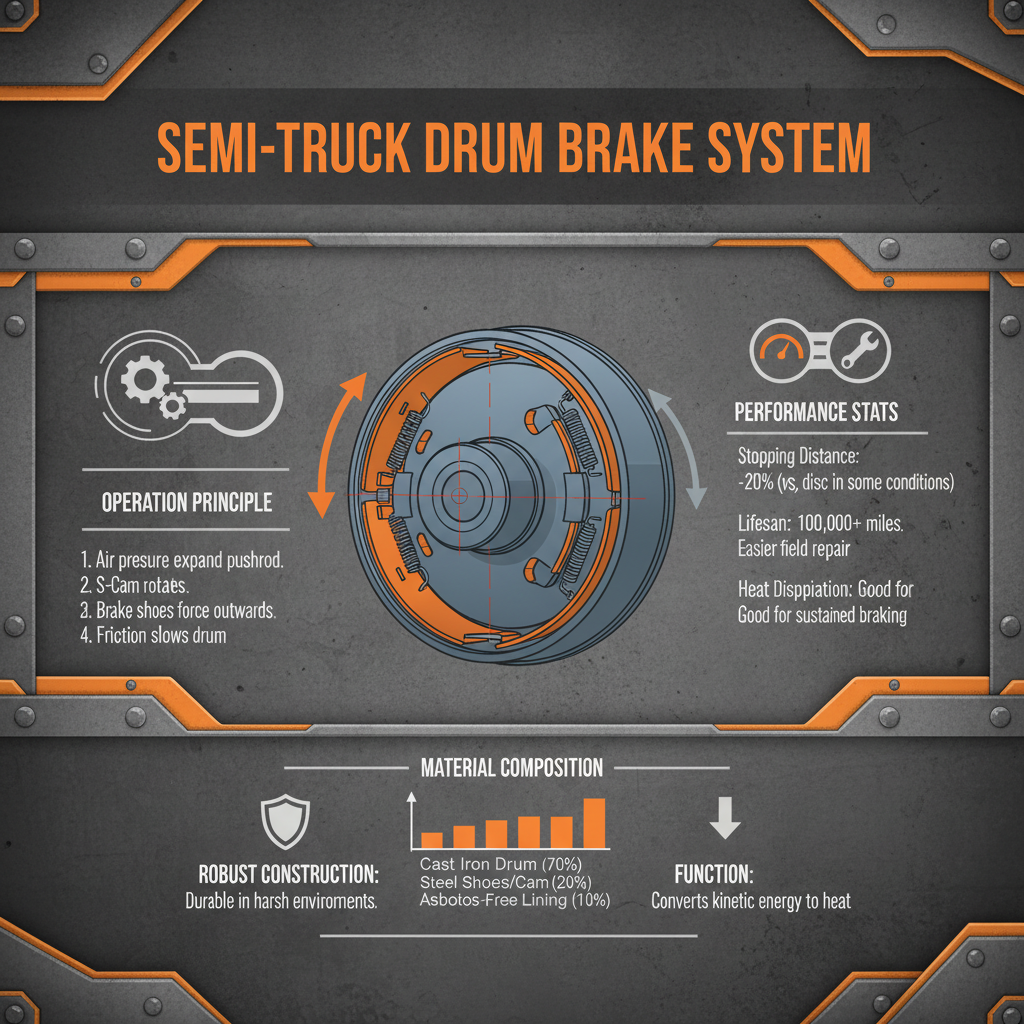
Drum brakes operate on the principle of friction. When the driver presses the brake pedal, hydraulic pressure is generated, which pushes brake shoes outward against the inner surface of a rotating drum. This friction slows the drum, and consequently, the wheel. Semi-truck drum brakes are generally found on the steer axle and sometimes on all axles, providing significant stopping power. The system’s effectiveness depends on the condition of each component and proper adjustment. Regular inspection and maintenance are essential to ensure optimal performance and safety.
Key Takeaway: Drum brakes utilize friction between brake shoes and a rotating drum to slow or stop a vehicle. Proper maintenance is key to their effectiveness.
Key Components of a Semi-Truck Drum Brake System
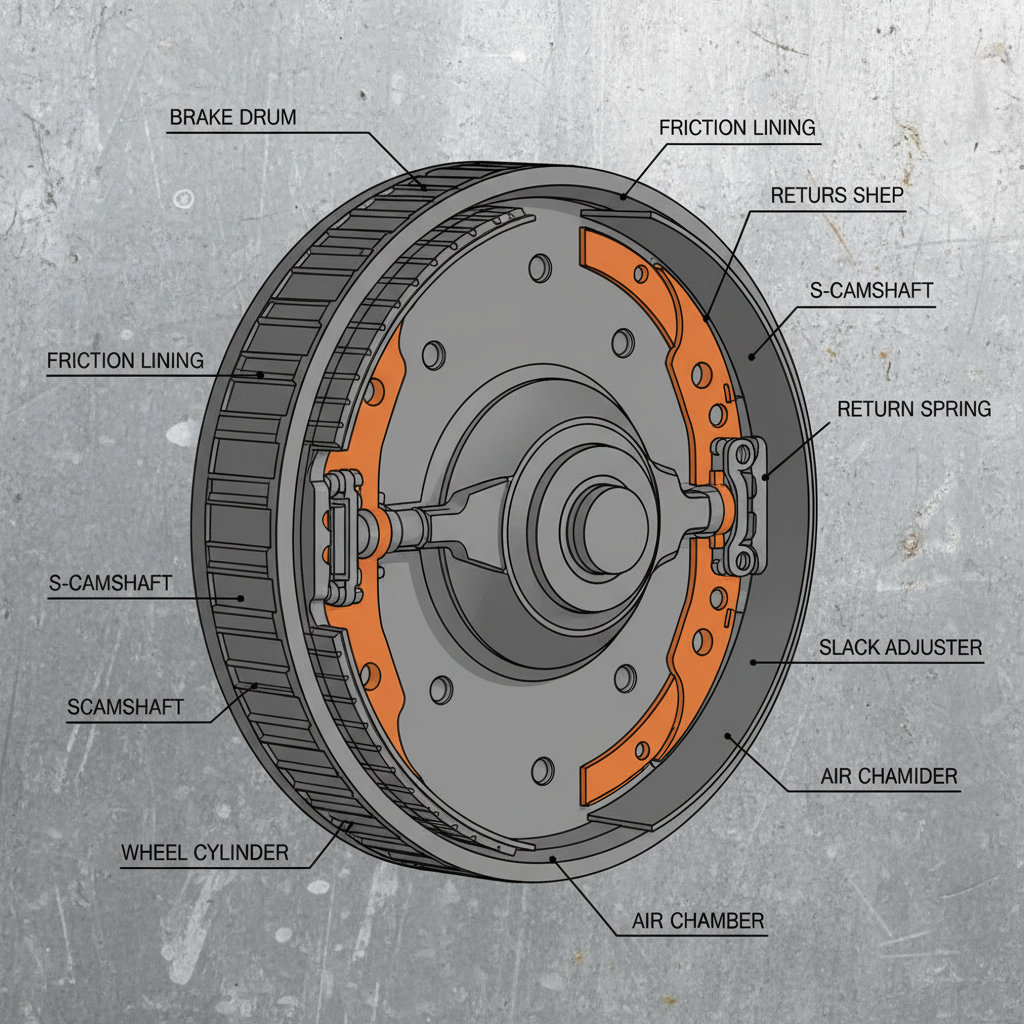
A semi-truck drum brake system comprises several crucial components. These include the brake drum itself, brake shoes, wheel cylinders, springs, self-adjusters, and backing plates. The brake drum is the rotating component against which the brake shoes press. Brake shoes are curved metal pieces lined with friction material. Wheel cylinders apply hydraulic pressure to the brake shoes. Springs hold the brake shoes in the retracted position. Self-adjusters maintain the proper clearance between the shoes and the drum, and the backing plate provides a mounting surface for all the components. Ningchai Brake Drum specializes in manufacturing high-quality brake drums built for durability and performance.
Drum Brakes vs. Disc Brakes: A Comparison
While both drum and disc brakes provide stopping power, they differ in design and performance characteristics. Disc brakes, increasingly common on newer trucks, use calipers to squeeze brake pads against a rotor. Drum brakes, as described above, use shoes pressing against a drum. Disc brakes generally offer better heat dissipation and fade resistance, making them preferred for heavy-duty applications. However, drum brakes are often more cost-effective and can provide comparable stopping power when properly maintained. Understanding the strengths and weaknesses of each system is crucial for informed maintenance decisions.
Common Issues with Semi-Truck Drum Brakes
Several issues can affect the performance of drum brakes. These include worn brake shoes, damaged brake drums, leaking wheel cylinders, and malfunctioning self-adjusters. Worn brake shoes reduce friction, decreasing stopping power. Damaged drums can cause uneven braking and vibrations. Leaking wheel cylinders diminish hydraulic pressure, leading to brake fade. Malfunctioning self-adjusters result in excessive pedal travel and reduced braking efficiency. Regular inspections by qualified technicians can identify and address these issues before they escalate.
Importance of High-Quality Brake Drum Replacements
When replacing drum brake components, using high-quality parts is crucial. Substandard parts can fail prematurely, compromising safety and increasing maintenance costs. Ningchai Brake Drum manufactures drums using durable materials and rigorous quality control processes. This ensures long-lasting performance and reliable stopping power. Investing in quality replacements ultimately saves time and money while prioritizing safety on the road.
Conclusion: Maintaining Peak Braking Performance
Understanding the function and maintenance of drum brakes on a semi truck is vital for safe and efficient operation. Regular inspections, timely repairs, and the use of high-quality replacement parts like those from Ningchai Brake Drum are key to ensuring optimal braking performance and preventing accidents. Prioritizing brake system health is an investment in safety and long-term cost savings.
Frequently Asked Questions (FAQs)
How often should I inspect my semi-truck’s drum brakes?
Inspections should be performed during every pre-trip and post-trip inspection, as mandated by DOT regulations. A more thorough inspection should be conducted by a qualified mechanic during scheduled maintenance intervals, typically every 3-6 months, or more frequently depending on operating conditions. Pay close attention to brake shoe thickness, drum condition, and hydraulic fluid levels. Early detection of potential issues is critical to preventing more serious problems and ensuring safe operation.
What are the signs of worn drum brakes?
Common signs include squealing or grinding noises when braking, reduced braking power, longer stopping distances, vibration in the steering wheel or brake pedal, and excessive pedal travel. Visible signs, such as cracked or scored drums, or brake shoes worn down to the rivets, also indicate the need for immediate attention. Ignoring these symptoms can lead to brake failure and potentially dangerous situations.
Can I replace brake shoes myself?
While some experienced mechanics may be comfortable replacing brake shoes, it's generally recommended to have this work performed by a qualified professional. Drum brake systems require precise adjustments and knowledge of hydraulic systems. Improper installation can lead to brake failure. It’s best to prioritize safety and rely on a skilled technician for this critical maintenance task.
What role does the wheel cylinder play in drum brake function?
The wheel cylinder is a vital hydraulic component. It receives pressure from the master cylinder when the brake pedal is pressed and converts this pressure into mechanical force, pushing the brake shoes against the drum. A leaking or failing wheel cylinder will result in reduced braking force and potential brake failure. Therefore, regular inspection of wheel cylinders for leaks is crucial during brake maintenance.
-
Understanding Drum Brakes on Cars A Complete Guide to ReliabilityNewsApr.16,2026
-
Understanding Drum Brakes on Car for Safety and PerformanceNewsApr.09,2026
-
Understanding the Mechanics and Maintenance of Drum Brakes on a CarNewsApr.04,2026
-
Understanding and Fixing Drum Brakes Not Self Adjusting for Vehicle SafetyNewsMar.31,2026
-
Understanding and Fixing Issues with Drum Brakes Not Releasing EffectivelyNewsMar.28,2026
-
Nissan Sentra Drum Brakes A Comprehensive Guide to Maintenance and ReplacementNewsMar.26,2026
-
Understanding Drum Brakes Meaning and Comprehensive Braking System GuideNewsMar.24,2026